


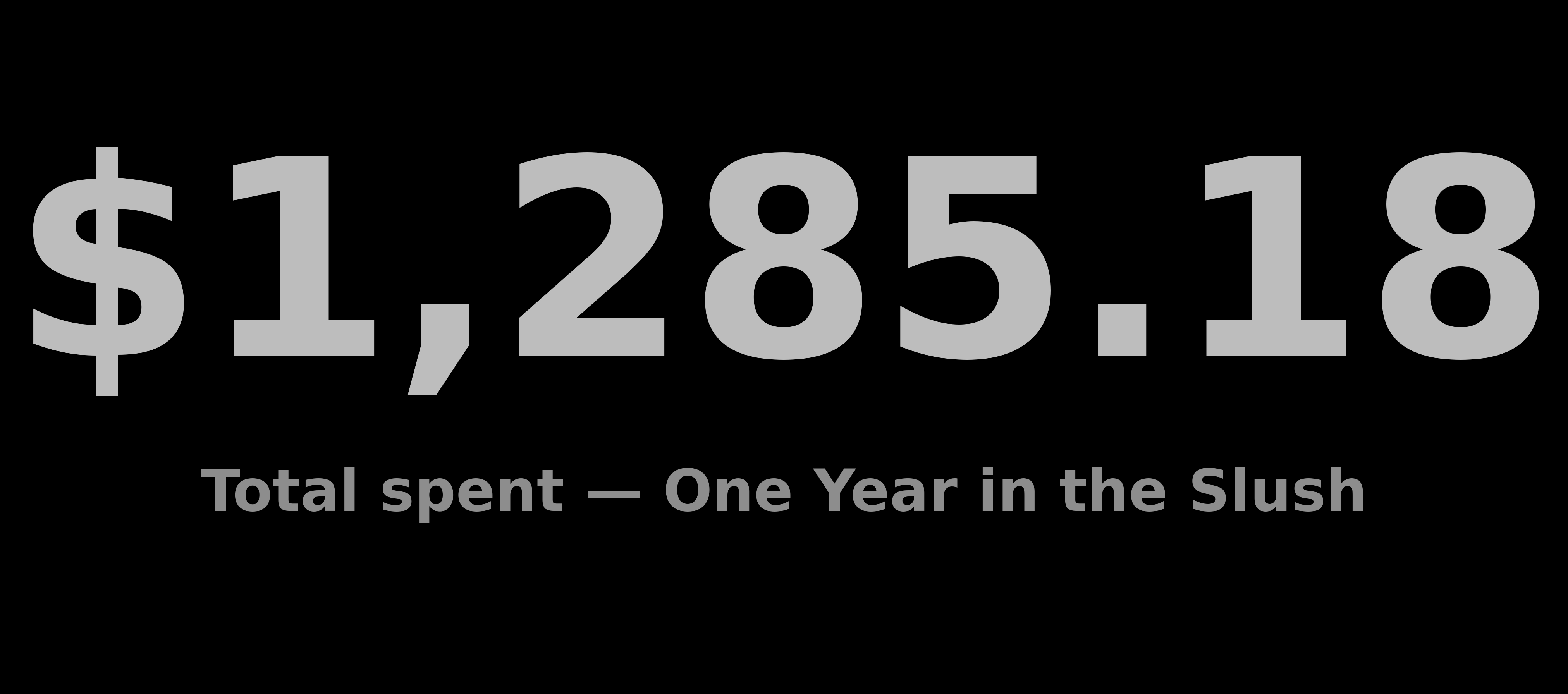
How to spend $1,285 and remain unpublished: a few hundred on submissions, the rest on hard lessons.1 If you’re like me, you’ll read this and make the same mistakes anyway.
What Did I Buy?
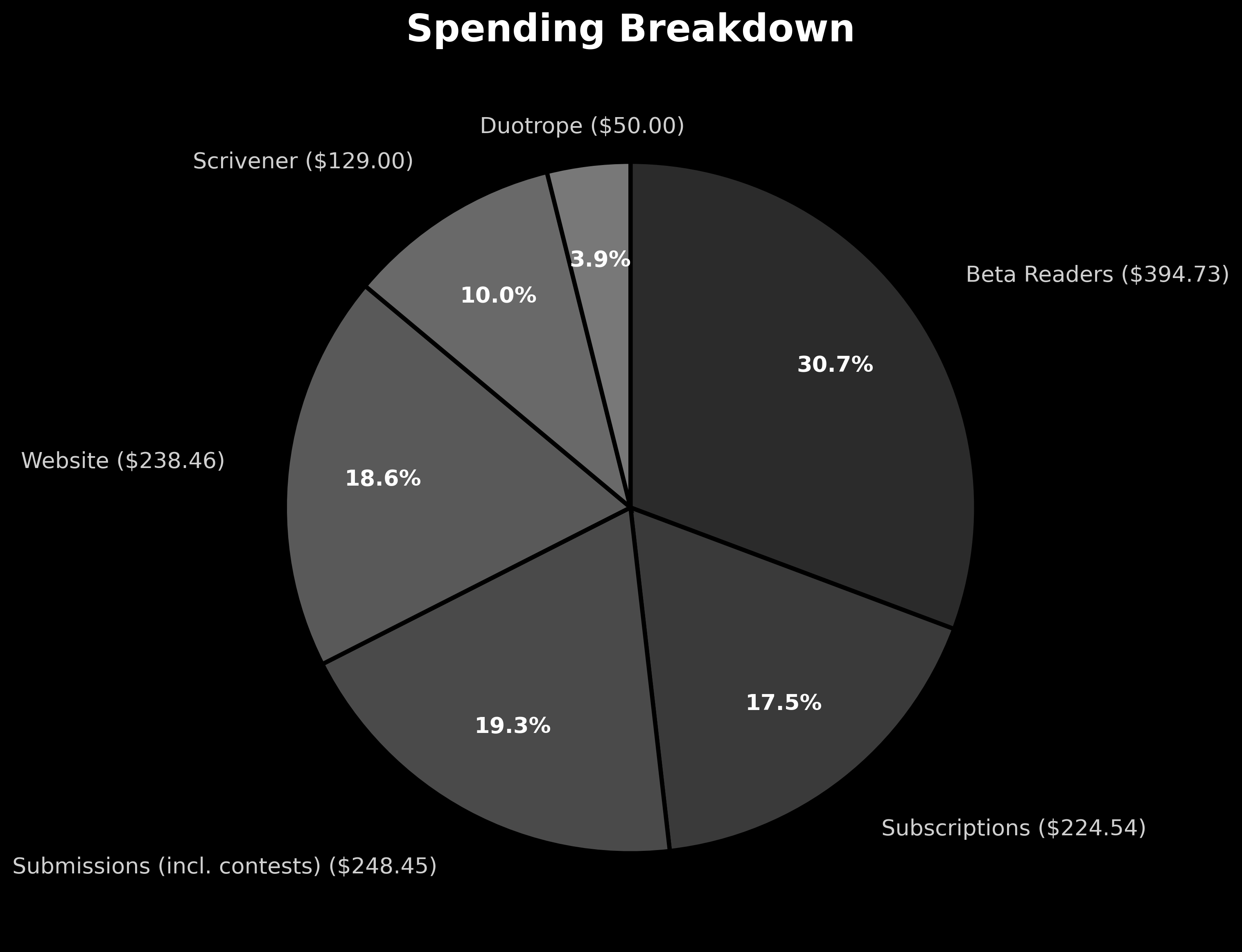
34 submissions, eight beta readers, five subscriptions, one Duotrope membership, a Squarespace site, and Scrivener for each OS I use. Was it a waste? Depends on perspective, but probably, by many standards, especially since submitting doesn’t have to cost anything. Plenty of publications read work for free.
Submissions
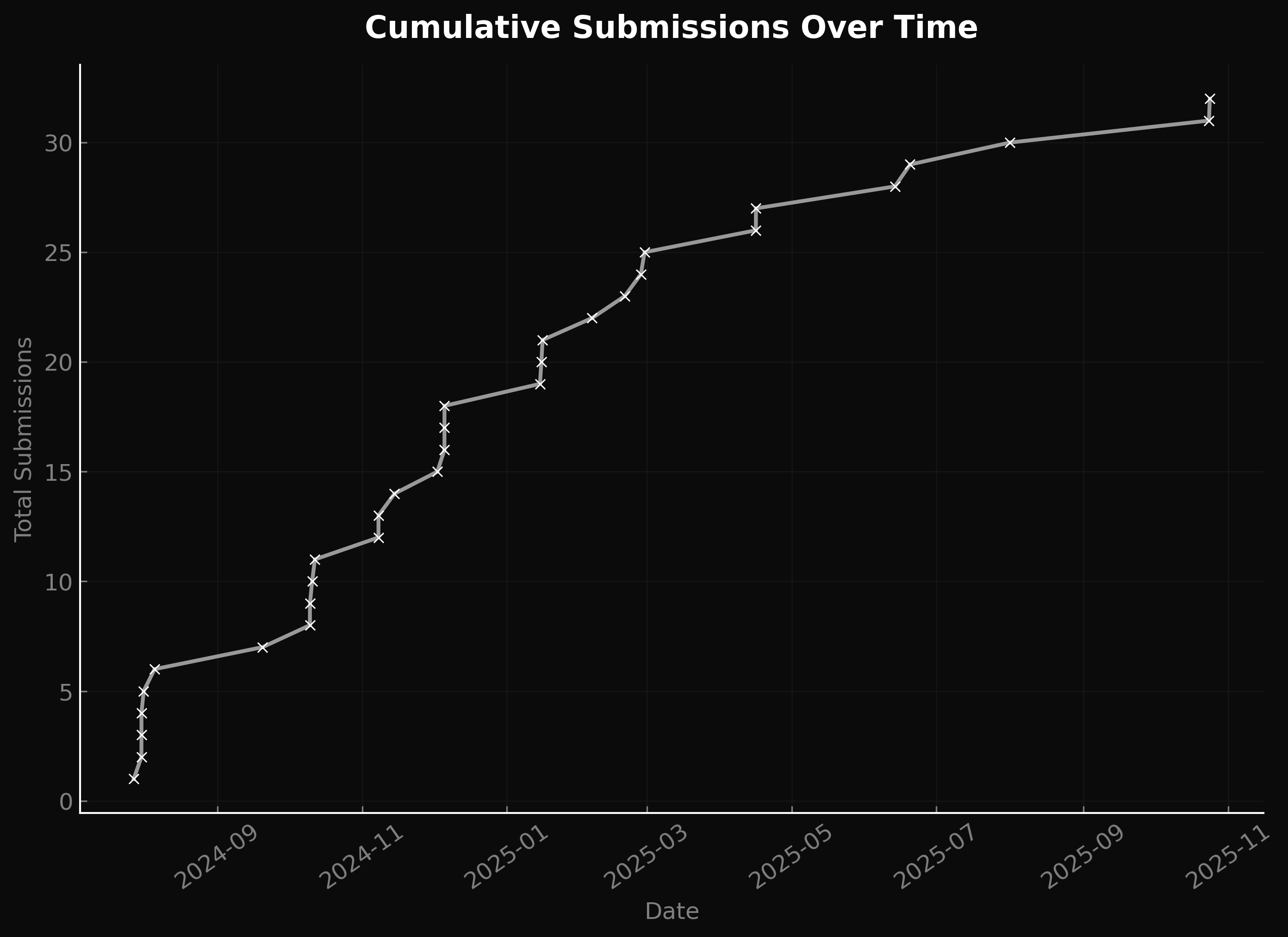
Four total manuscripts, three of them short stories, and 31 submissions on just two of the manuscripts. The piece I submitted most? A novelette.
Print vs. Digital
I favored print publications at first because I wanted to hold something real in my hands. I don’t care about print anymore. Submitting a novelette for print publication was costly. Many pubs won’t even read a short story for less than three bucks, and I found novelette submissions to average ten dollars each.
Moving too quickly
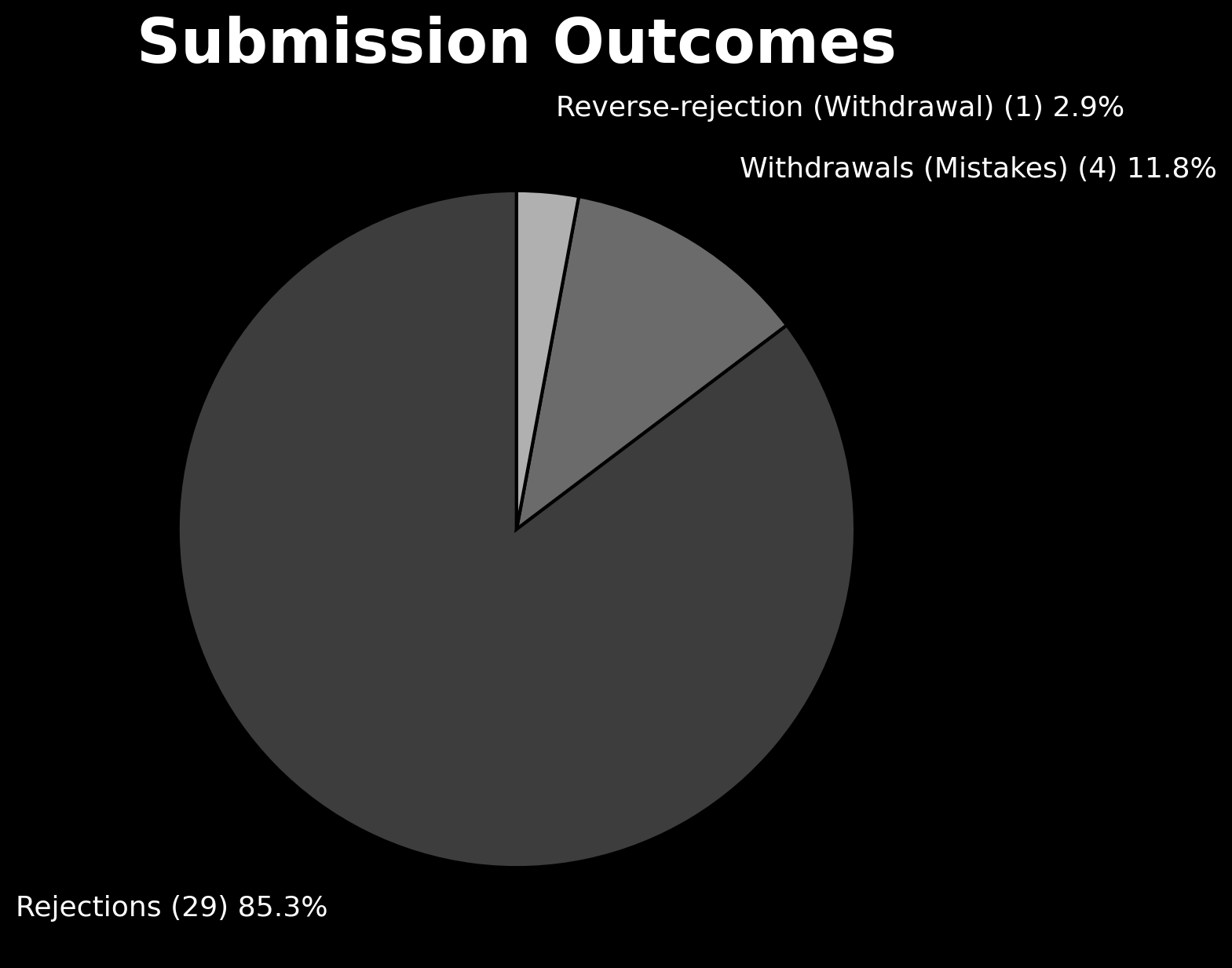
I misspelled a publication’s name in my cover letter and withdrew immediately. They didn’t refund me, so I didn’t resubmit. It’s happened more than once, and it’ll probably happen again. Now, I copy and paste the publication title where appropriate.
I’ve also submitted unfinished manuscripts. Now, I sit with a finished piece for a while before sending it out, even if I’m dying to see another rejection letter.
Hybrid / Vanity Publications
These were an odd thing to stumble upon. I didn’t know what hybrid or vanity presses were until after I’d paid to find out. They have their place—just not for me. I learned the hard way. They got the money I might as well have burned, but I kept first-publication rights. Call it a reverse-rejection.
Slowing Down
I could’ve avoided some of these mistakes by reading more closely, paying more attention, and actually subscribing to the journals I was submitting to. Part of the problem was finding small presses willing to read a novelette at all; the market’s thin for anything between a short story and a novel. I’d read that before submitting, but that goes for most of my “mistakes.”
The last rejection I received for the novelette encouraged me to keep submitting it, despite my plans to shelve it. These are the fumes I’m running on, and the high’s great. I’m no longer racing to get published, but I’m not exactly slowing down either. There’s always more to do, or buy.
Subscriptions
Many publications nudge you to pay—reading fees, contest entries, subscriptions, etc.—to avoid “wasting editor time.” Maybe it’s fair that editors ask us to pay for wasting their time. Rattle is the counterexample: ~60,000 poetry submissions a year on a paid circulation under 10,000 and still handles the pile without fees.2
Granta
Granta, with its polished media kit and relatively large audience, still charges submission fees. They encourage you to read the magazine first, then offer 50% off a subscription after you’ve paid to submit. Familiarity as a reward, not a prerequisite. And yes, the “Granta subscription discount” page looks like anyone can reach it.3
Granta reports a paid circulation of ~23,000 (readership ~37,000); it’s effectively endowed, holding ~£9.33m in long-term investments that yielded ~£263k in 2024—only a sliver of a ~£1.81m annual budget.45 At this scale, charging writers £3.50 is a policy preference, not physics. Similarly endowed peers, like Rattle with ~$7.33M in assets, keep submissions at $0.6
I sent work anyway. The next issue was “China.” My piece wasted their time, for that and any other editions they had planned.
The New Yorker
The New Yorker boasts more than 9 million print readers,7 which is likely why I bought the subscription before deciding not to submit—I wanted to see what kind of audience I’d be interrupting. I’d read it before, but never subscribed. The idealistic vision of the magazine had been with me since college.
As luck would have it, Google still sports a link to an outdated media kit, likely forgotten by someone at Direct Action Media.8 What I like about this kit is the detailed audience metrics not usually available as a first-pass download on the open internet. If only I had found it sooner, I’d have saved on the subscription fee and learned what my subscription revealed over six months—their audience is not mine.9 Older, affluent, managerial; median age ~48; long attention (avg ~72 minutes/issue); a million-copy rate base, about four readers per copy. Definitely not my lane.
The very idea of media kits, complete with demographic data, seems to signal that I’ll never publish with a publication that has one. Still, it’d save everyone time if each pub were this transparent. Like kids vying for a trip to Cedar Point, literary magazines have to be big enough to capture that kind of data. How do they get that big? Readers. And for most small publications, those “readers” are writers.10
Contests: They’re Expensive
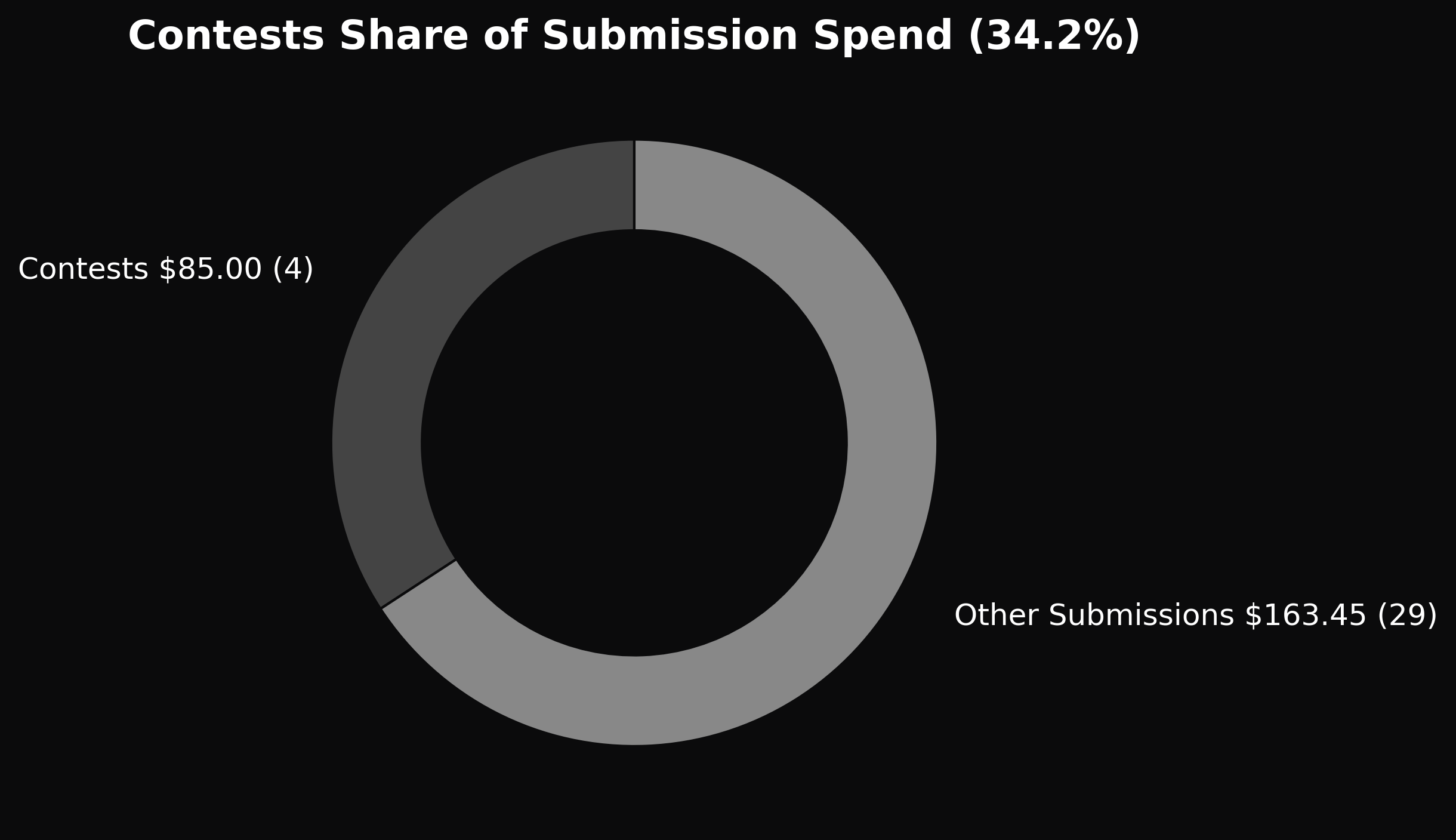
With the average cost of a lit mag submission at $3, I could have almost doubled my number of total submissions if I weren’t gambling on contests that charge up to $30 each.
Is there ever truly a good reason to submit to contests? Sure, if your chances are basically certain. Otherwise, this has been the biggest money sink. Fine if you can afford the gamble, but my work probably isn’t suited for traditional contests, let alone traditional publishing. I even paid extra to have my work reviewed by an editing team for a novel-excerpt contest,11 only to be told that I shouldn’t have submitted a novel excerpt. What’s obvious to people used to the pub game wasn’t obvious to me in year one. Apparently, novel excerpts should be self-contained stories with arcs.
Beta Readers
Family only goes so far, and if you’re like me, reading groups won’t cut it either. I am fortunate enough to be able to pay for beta readers, but it does get costly, so I use this sparingly. DM me for recommendations.
Website
This one’s funny because I built it before finding Substack and then never used it. This could be a waste of a couple hundred bucks, so I think I’ll take advantage of migrating More Weight when the sunk cost has eaten enough of my will to resist.12
Other Tools
Submittable is a good tool. Duotrope is better if you’re hunting for places to send work. Is it better than Submission Grinder? At least Submission Grinder is free. I use both. But we should already know the publications we’re submitting to, right? Really live and breathe the nuanced taste of the editors. Let’s call these tools subscription aggregators. To that end, Chill Subs feels cleaner and easier to use. Looks like I have my next target to dump money into.
Don’t buy a word-processing tool for short stories. Google Docs works just fine for that. Unfortunately, it took buying a tool to realize there were standard manuscript practices outside of double-spacing lines.13 Accidentally buying Scrivener was the best thing I ever did for novel organization.
What I Could Have Bought Instead
Vacation, bills, funeral costs, etc. But nothing tops the pursuit of validation.

This footnote originally read, “Still no reason to revise this footnote.” Now with a publication credit, I’m afraid it’s not as funny.
Rattle’s editor Timothy Green reports the team receiving ~250,000 poems per year. With up to four poems allowed per submission, that implies a little over four poems per entry on average; annual volume also includes contests and themed calls.
Further reading: Colburn Classroom | After Dinner Conversation
It looks tied to submissions, but there’s no gate as of publication. Do with that what you will. I didn’t learn it until after I’d paid.
Granta’s 2024 Media Pack PDF confirms its reported circulation and readership figures.
UK Charity Commission, GRANTA TRUST (Charity no. 1184638) — Financial history. Shows FY2024 spend (~£1.81m), long-term investments (~£9.33m), and investment income (~£263k).
ProPublica Nonprofit Explorer, Rattle Foundation (EIN 27-1747424) — FY2023 summary. Shows total assets (~$7.33M), expenses (~$521k), revenue (~$397k) incl. dividends (~$188k).
The New Yorker’s media kit is available via Condé Nast.
Find the May 2016 The New Yorker media kit PDF here. If it’s removed, DM me and I’ll send you my copy.
There may be some overlap, but I’ll never submit. Even if the overlap someday is total. Why? I said I’ll never submit.
It would be impossible to prove this without direct data from every publisher, though some are transparent about it. Lucent Dreaming, for instance, notes that its audience is “mostly writers.” Jane Friedman similarly observes that literary journals tend to rely on submission fees and subscriptions from the same group of writer-readers to sustain their operations.
For transparency: I forgot to include the $69 “editor review” and I’m not rebuilding the graphics (I could blame Substack’s nonexistent tables and charting features, but that’d be an excuse). The real all-in is $1,354.18. I’ve likely missed other drips too. Whether it’s $1,285 or $1,354, the point, whatever that is, stands.
You don’t have to buy a word processor to find manuscript templates. William Shunn’s website has everything you need for free.
The only thing we like more than a graph is pulling back the curtain on the bigwig outfits.